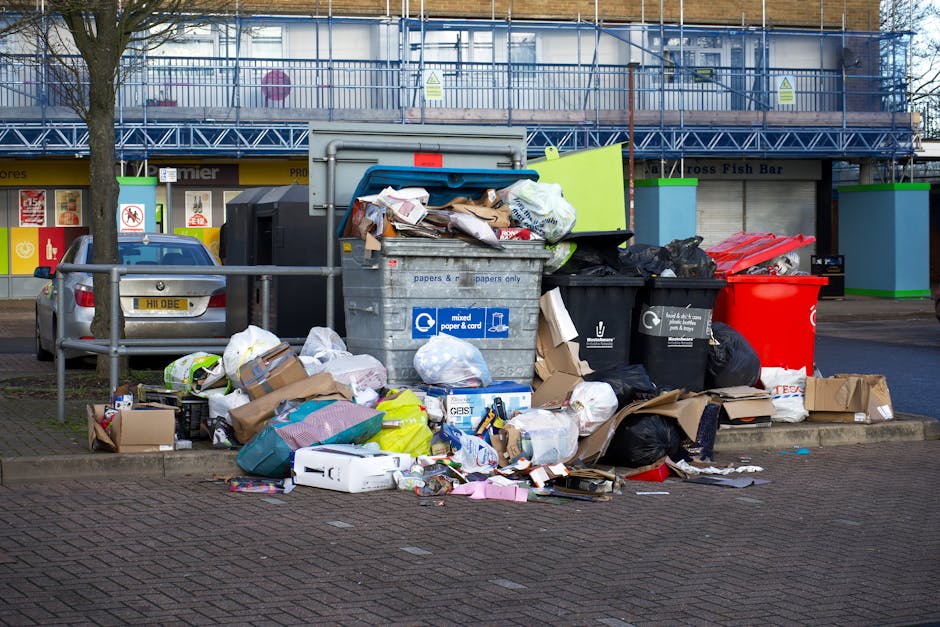
How to avoid hidden rubbish removal charges in South London
If you've ever booked a clearance and then seen the final bill creep up, you'll know the feeling: a bit of shock, a bit of annoyance, and that awkward moment where you wonder whether you missed something obvious. When people search for How to avoid hidden rubbish removal charges in South London, they usually want one thing above all else: a straightforward way to book waste removal without nasty surprises.
The good news is that most hidden costs are avoidable once you know what to ask, what to check, and which parts of a quote tend to get glossed over. In South London especially, where access can be tight, parking can be a nuisance, and loads can vary wildly from a single sofa to a full house clearance, the details matter. This guide walks you through the whole process in plain English so you can compare quotes properly, spot red flags early, and make a calm decision rather than a rushed one.
Along the way, we'll cover pricing traps, practical checks, local considerations, compliance basics, and a simple checklist you can use before anyone turns up. Let's make it less stressful. Honestly, it should not feel like a treasure hunt just to find the real price.
Table of Contents
- Why hidden rubbish removal charges matter
- How rubbish removal pricing usually works
- Key benefits of getting the price right
- Who needs this and when it makes sense
- Step-by-step guidance to avoid extra charges
- Expert tips for better results
- Common mistakes to avoid
- Tools, resources and recommendations
- Law, compliance, standards and best practice
- Options and comparison table
- Case study or real-world example
- Practical checklist
- Conclusion
- Frequently asked questions
Why hidden rubbish removal charges matter
Hidden charges do more than inflate a bill. They can change the whole experience of booking waste removal. A quote that looks affordable on first glance may become much less appealing once the team adds access fees, labour surcharges, stair carry costs, waiting time, disposal charges, or extras for certain waste types. That is where people feel caught out.
In South London, the risk is slightly higher than many people expect because the area is full of different property types: terraced houses with narrow front paths, flats with shared entrances, homes on busy roads, and commercial premises with awkward loading access. A clear quote should take those things into account from the start. If it doesn't, the price can drift.
This matters whether you're clearing a single item, emptying a garage, or arranging a full property clearance. A small misunderstanding at the quote stage can snowball. One missed detail, then another, and suddenly the job is more expensive than planned. Nobody enjoys that, especially when you're already dealing with clutter, a move, or a deadline.
There's also a trust issue. Straight pricing builds confidence. Vague pricing does the opposite. And once you've had one bad experience, you tend to become much more cautious next time. Fair enough, really.
Expert summary: The easiest way to avoid hidden rubbish removal charges is to make the job as specific as possible before booking. The more accurate your description, the less room there is for surprise additions later.
How rubbish removal pricing usually works
Rubbish removal pricing is usually based on a mix of waste volume, labour, access, waste type, and disposal costs. That sounds simple enough, but the small print is where most surprises live. A provider may quote by load size, van space, weight, item type, or a combination of all of them. Some include labour and disposal in one figure; others separate them.
Here's the part many people miss: two jobs that look similar can cost very different amounts. A bulky wardrobe on a ground floor with easy parking is one thing. The same wardrobe carried down three flights of stairs from a top-floor flat on a busy road is another story entirely. The work is not the same, and the price often reflects that.
Common pricing elements include:
- Volume or load size: how much space the waste takes in the vehicle.
- Labour: the time and number of people needed to remove it.
- Access difficulty: stairs, long walks, parking restrictions, or tight entrances.
- Waste type: mixed household rubbish, furniture, green waste, builders' waste, or business waste.
- Disposal fees: charges linked to lawful disposal and recycling processes.
To be fair, a quote can only be accurate if the provider knows enough about the job. That's why photos, honest descriptions, and a quick walkthrough of the space can help so much. If you say "just a few bags" and it turns out to be a van-load of mixed clutter, the quote was never really fit for purpose.
In our experience, the least transparent quotes often rely on broad language. "From" pricing, "subject to inspection," or "final price on arrival" are not always bad, but they should prompt more questions. You want the scope to be pinned down before anyone lifts a thing.
Key benefits and practical advantages
Getting pricing right is not just about saving money, although that is obviously nice. It also makes the entire process smoother and less stressful. When you know what is included, you can plan properly and avoid those little friction points that turn a simple job into an all-day headache.
1. Better budget control
If you know the full cost before the team arrives, you can budget with confidence. That matters for households, landlords, letting agents, and businesses alike. A clean quote helps you decide whether to remove everything in one go or split the job into stages.
2. Less back-and-forth
Clear pricing usually means fewer awkward calls later. No one wants to be phoning around on a Friday afternoon because the quote did not mention stair carry or parking. Small issue, big annoyance.
3. Faster decision-making
When the information is clear, you can compare providers more easily. You spend less time decoding vague estimates and more time choosing the right service.
4. Lower risk of conflict on the day
Transparent pricing reduces the chance of disputes once the team arrives. Everyone knows what they are there to do, how much waste is being taken, and what the expected cost should be.
5. Better service fit
A detailed quote often reveals whether you actually need rubbish removal, waste clearance, furniture disposal, or something more specialist such as builders' waste removal. Choosing the right service from the start can save both time and money.
If you're clearing a flat, garage, garden, or office, the right fit matters more than many people realise. A service like flat clearance can be far more suitable than a generic "man and van" arrangement when stairs, shared access, and mixed items are involved.
Who this is for and when it makes sense
This advice is useful for almost anyone arranging waste removal in South London, but some people benefit more than others. If you've got bulky items, mixed rubbish, or a deadline, the chance of being quoted poorly goes up. That's just the reality.
It makes particular sense if you are:
- moving home and need a clear-out before handover
- clearing a rental between tenancies
- dealing with a garage, loft, or shed full of forgotten stuff
- removing old furniture or white goods
- managing office waste or business waste
- sorting out builders' debris after refurb work
- tidying a garden after pruning, landscaping, or seasonal work
South London homes and premises often have access quirks that affect pricing. Think permit zones, basement flats, limited loading space, or long carries through communal hallways. Those details are not minor. They're the details.
It also makes sense for people who have had a bad surprise before. If you've ever been told the quote was "just an estimate" and then watched the final total climb, you'll know why asking better questions next time is worth it.
Step-by-step guidance
Here is the practical part. If you follow these steps, you will dramatically reduce the risk of hidden rubbish removal charges in South London. No magic, just a bit of careful prep.
1. Describe the waste properly
Start by listing exactly what needs removing. Be specific. A sofa is not the same as "some furniture." Mixed household junk is not the same as a few bags. If there is builders' waste, broken plasterboard, rubble, or anything potentially awkward, say so early.
Photos help. A lot. Take a few from different angles in decent daylight if you can. You do not need film-set lighting, thankfully, but a clear image helps the provider judge volume and access.
2. Check what the quote actually includes
Ask whether the quote covers labour, loading, disposal, fuel, VAT if applicable, and any recycling or sorting costs. If the answer is vague, keep asking. You are not being difficult. You are being sensible.
Useful question: "Is this the final price, or are there circumstances where it can change?" That one line can save a lot of hassle later.
3. Confirm access conditions
Tell the provider about stairs, lifts, narrow entrances, limited parking, basement access, long walkways, or time restrictions. In South London, a job can be perfectly straightforward on paper and still awkward in practice because of parking or access. If a team has to park two streets away and wheel everything down a busy pavement, that affects the job.
4. Ask about weight-based or item-based extras
Some companies base pricing on the size of the load; others on the type of waste. If you have heavy materials, bulky items, or a mixed load, ask whether that changes the quote. Builders' waste, mattresses, fridges, and certain other items can carry different handling costs.
5. Get the price in writing
Written confirmation matters. It doesn't have to be fancy. An email or message with the scope, price, and any conditions is enough to keep everyone on the same page.
6. Ask what happens if the load is larger than expected
This is one of the most useful questions you can ask. If the team arrives and the volume is higher than described, how will they adjust the price? Will they stop and re-quote, or continue at an agreed rate? Knowing that in advance avoids pressure on the day.
7. Make sure the provider is clear about disposal
You want lawful, responsible disposal, not vague promises. A proper provider should be able to explain how waste is handled. That matters for compliance and peace of mind.
8. Compare more than just the headline price
A cheaper quote is not always better. Sometimes the lower price hides extra fees, limited coverage, or a bare-bones service. Compare the full picture: clarity, responsiveness, inclusions, and the way questions are answered.
If you want a sense of how services are typically organised, it can help to look at broader options such as waste removal or more specific services like furniture disposal depending on what you actually need taken away.
Expert tips for better results
Here are the little things that make a surprisingly big difference. They are not glamorous, but they work.
- Use photos instead of guesswork. A good set of images can prevent underquoting and overquoting.
- Group waste by type. Mixed loads can be more complicated than a single category of rubbish.
- Be honest about awkward items. If something is especially heavy, broken, wet, or dirty, say so.
- Check the access route. Measure narrow doorways, stairs, or lifts if you suspect a tight fit.
- Keep an eye on parking. A clear parking plan can help avoid delay-related costs.
- Ask about same-day or urgent bookings. Faster service can be convenient, but urgency sometimes changes pricing.
One thing people often forget is timing. If you ask for a quote late in the day, with a job needed first thing tomorrow, you are naturally narrowing your options. That can lead to rushed decisions. When possible, allow a bit of breathing room. Even an extra day can help.
And yes, sometimes the difference between two quotes is not the quote itself but how much confidence you have in the person explaining it. That counts for something.
Common mistakes to avoid
Most hidden charges are predictable once you know the common mistakes. The funny thing is, people do not usually make these mistakes because they are careless. They make them because they are busy, or in a hurry, or trying to clear clutter before life gets even busier. Fair enough.
1. Describing the job too loosely
"A few bits and pieces" can mean almost anything. The quote will only be accurate if the description is accurate.
2. Forgetting about access costs
If there are stairs, no parking, or a long carry, mention it. Otherwise, the quote may rise once the team sees the reality.
3. Assuming all waste is treated the same
Different waste types can have different handling requirements. Builders' waste, business waste, and household rubbish are not interchangeable in pricing terms.
4. Not asking what is excluded
It is easy to focus on what is included and forget to ask what is not. Exclusions are where some surprise costs live.
5. Ignoring minimum charges
Some providers have minimum fees even for smaller loads. That is not unusual, but you should know about it early.
6. Booking based only on the cheapest quote
The lowest number can be tempting. But if the quote is vague, the final bill may not be low at all. Cheapest up front is not always cheapest overall.
7. Leaving the waste mixed and unprepared
If possible, separating items by type can make the job easier to quote and easier to complete. A pile of random items in a hallway is harder to assess than a tidy, labelled group.
As a tiny rule of thumb: if you cannot explain the job clearly in one minute, the provider probably cannot price it accurately in one minute either. That's just common sense, really.
Tools, resources and recommendations
You do not need specialist software to avoid hidden rubbish removal charges. A few simple tools and habits are usually enough.
- Phone camera: take clear photos of the waste and access points.
- Notes app: list item types, approximate volume, and any awkward details.
- Tape measure: useful for bulky furniture, narrow hallways, or tight stair turns.
- Checklist: keep a short list of what was quoted, what was included, and what may change the price.
If you are dealing with a larger job, browsing specific service pages can help you match the job to the right service type. For example, if it is a home full of mixed items, home clearance or house clearance may be more suitable than a general one-item collection. If the job is office-based, office clearance or business waste is usually a better match.
It also helps to think in categories. One old mattress, one broken wardrobe, and a pile of cardboard are all rubbish, yes, but they may not be priced or handled in exactly the same way. The more you narrow it down, the fewer surprises later.
Law, compliance, standards and best practice
Waste removal is not just a pricing issue. It is also a responsibility issue. In the UK, waste should be collected and disposed of lawfully, and you should be cautious about any provider whose process sounds vague or overly casual. If a company cannot explain where waste goes, that is a red flag. Full stop.
For homeowners and businesses, best practice is to use a provider that understands proper disposal routes, recycling where possible, and the safe handling of any unusual waste. That matters even more for items that might be regulated, difficult to transport, or unsuitable for a standard mixed-load collection.
For business customers, the expectations are usually even higher because duty of care, record-keeping, and responsible disposal practices become more important. A professional-looking quote is not enough on its own. You want practical reassurance that the waste will be dealt with properly.
There is also a fly-tipping angle. If a price seems unrealistically low, ask yourself how the provider can make that work. Cheap is not always clever if the waste ends up dumped somewhere it should not be. And nobody wants their clutter becoming someone else's problem.
Best practice, in plain language, looks like this:
- be clear about what is being removed
- get the scope and price confirmed in writing
- check how the waste will be handled
- avoid cash-only deals that seem overly vague
- keep a record of what was agreed
If you need a more specialised collection, such as builders' waste, a proper explanation matters even more. You can explore a dedicated service like builders' waste when the load includes renovation debris or other construction-related materials.
Options, methods, or comparison table
Not every job needs the same solution. Here is a simple comparison to help you see which approach may suit your situation best.
| Option | Best for | Pros | Watch-outs |
|---|---|---|---|
| Single-item collection | Sofas, mattresses, appliances, one bulky piece | Quick, simple, easy to explain | Minimum charges may still apply |
| General rubbish removal | Mixed household waste and small clear-outs | Flexible and convenient | Quotes can vary if the load is not described well |
| House or home clearance | Whole rooms, lofts, garages, larger declutters | Good for bigger jobs with more complexity | Access and labour details must be clear |
| Business or office waste clearance | Workplaces, retail spaces, storage rooms | Structured, efficient, often repeatable | Compliance and timing need careful planning |
| Specialist waste type collection | Builders' waste, garden waste, furniture, bulky items | Better fit for specific materials | Type-specific handling may affect the final price |
The main thing to notice is that the service type shapes the price conversation. If you ask for the wrong category, the quote may look fine but still not fit the job. That is where people get caught out.
If you are weighing options for furniture, a focused service such as sofa removal can sometimes be more straightforward than asking for a broad waste collection when all you need is one awkward item gone.
Case study or real-world example
Picture this. A family in South London clears out a spare room before guests arrive. The room has two broken chairs, a small chest of drawers, several bags of old clothes, a lamp, and a pile of mixed bits from a storage corner that has quietly grown over years. Nothing dramatic. Just the usual "we'll deal with it later" pile.
At first, they ask for a quote by phone and say it is "just a small clearance." The provider gives a rough estimate. Then they take a moment, walk through the room, take photos, and send a more accurate description: access through the front door only, one flight of stairs, limited parking, mixed household items, and one bulky piece that may need two people. The revised quote is clearer, and the price makes more sense because the provider has the full picture.
On the day, there is no argument about extra labour, no surprise access fee, and no awkward "we didn't realise it was upstairs" conversation. The job is completed in one visit. Simple, really. Not always easy, but simple.
The difference was not luck. It was detail. A bit of prep upfront saved the family money and kept the day calm. That's the pattern you want to repeat.
For larger household jobs, looking at options such as garage clearance or garden clearance can also help you line up the right service before booking, which usually means fewer surprises.
Practical checklist
Use this checklist before confirming any rubbish removal booking in South London. It is plain, maybe a bit boring, but it works.
- Have I described the waste clearly and honestly?
- Have I included photos or a walk-through if needed?
- Do I know whether the quote includes labour and disposal?
- Have I mentioned stairs, lifts, parking, and access issues?
- Do I know whether VAT or any other charges apply?
- Have I asked what could cause the price to change?
- Is the final price confirmed in writing?
- Do I know how the waste will be disposed of?
- Have I compared more than one quote?
- Have I checked whether the service matches the job type?
And one extra thing: trust your instincts. If a quote sounds too loose, too rushed, or oddly cheap, pause and ask another question. You are allowed to do that. In fact, you probably should.
Conclusion
Learning how to avoid hidden rubbish removal charges in South London is mostly about clarity. Clear description, clear pricing, clear access details, clear expectations. That's the formula. Nothing fancy, just careful enough to stop surprises before they start.
Once you know what the quote should include and which questions to ask, you can compare providers with far more confidence. You will also have a better sense of which service fits the job, whether that is a simple waste collection, a furniture disposal job, or a larger clearance that needs more planning.
And to be honest, that peace of mind is worth a lot. It means less stress on the day, fewer awkward follow-up calls, and a better chance of getting the job done properly the first time.
Get a free quote today and see how much you can save.
If you are still unsure, start with one clear photo, one honest description, and one direct question about extra charges. That small bit of effort can save you quite a bit later on, and that's a good feeling.
Frequently Asked Questions
What are hidden rubbish removal charges?
Hidden charges are extra costs that are not obvious at the time of booking. They can include labour surcharges, access fees, disposal additions, or changes linked to the type or size of waste.
How can I tell if a rubbish removal quote is genuine?
A genuine quote should be clear about what is included, what could change the price, and what information the provider needs from you. If the answer is vague, ask for more detail.
Do photos help reduce surprise costs?
Yes. Photos are one of the easiest ways to show the volume, type of waste, and access conditions. They make quoting much more accurate.
Should I expect extra charges for stairs or difficult access?
Sometimes, yes. If the team has to carry items a long way, up stairs, or through awkward access points, the price may reflect the extra labour involved. Always ask in advance.
Is the cheapest rubbish removal quote usually the best?
Not necessarily. The cheapest quote can be missing important details. A slightly higher quote that clearly includes everything is often better value overall.
What should I ask before booking waste removal in South London?
Ask what is included, whether the price is fixed, what could change it, how waste will be disposed of, and whether access issues affect the quote. Those are the big ones.
Can I get a fixed price for rubbish removal?
Often yes, if the provider has enough information to assess the job properly. Fixed pricing works best when you give accurate details and photos.
What kind of waste tends to cost more?
Heavy, bulky, awkward, or specialist items can cost more because they take extra handling or disposal planning. Builders' waste and mixed loads can also be more complex.
Do I need to separate my rubbish before collection?
It can help, though it depends on the service. Separating waste by type often makes the job easier to assess and may improve pricing clarity.
How do I avoid problems with illegal dumping?
Use a provider that can explain how waste is handled and disposed of responsibly. Keep records of your booking and avoid deals that seem suspiciously vague or unrealistically cheap.
Is rubbish removal different from waste clearance?
People often use the terms interchangeably, but some providers use them to describe slightly different services. The key is not the label alone, but whether the service matches your actual job.
What if the waste amount is larger than I expected?
Tell the provider as soon as possible. A larger load may change the quote, but it is usually better to adjust early than argue later. Being upfront helps a lot.
Can businesses in South London use the same booking advice as homeowners?
Yes, but businesses should be even more careful about records, timing, and compliance. Clear agreements matter even more when commercial waste is involved.
Where should I start if I need more than one type of clearance?
Start by identifying the main waste type. Then compare the relevant service pages, such as household, furniture, garden, or office options, so you book the closest match rather than a vague catch-all service.