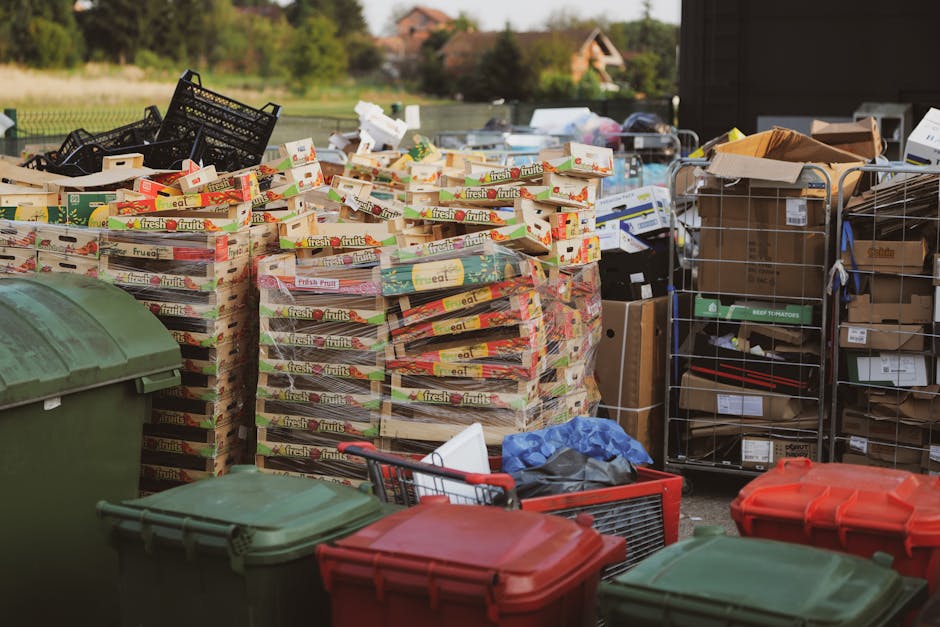
Bulk Waste Removal on Coldharbour Lane, Brixton
If you live or work near Coldharbour Lane, you already know the rhythm of the street: busy pavements, mixed-use buildings, tight access in places, and rubbish that can pile up faster than anyone planned. Bulk Waste Removal on Coldharbour Lane, Brixton is about dealing with that bigger, awkward, non-standard waste properly, without turning your day into a headache. Whether it's a broken sofa, office furniture, builders' offcuts, old appliances, or a full room's worth of clutter after a clear-out, the right removal service can save time, reduce stress, and keep the job neat from start to finish.
This guide explains what bulk waste removal actually involves, how it works on a real London street like Coldharbour Lane, what to check before booking, and how to avoid the common mistakes that lead to delays, extra costs, or messy results. It's practical, local, and written for people who just want the job done properly. Let's face it, nobody wants a skip blocking the pavement for longer than necessary.
Table of Contents
- Why Bulk Waste Removal on Coldharbour Lane, Brixton Matters
- How Bulk Waste Removal on Coldharbour Lane, Brixton Works
- Key Benefits and Practical Advantages
- Who This Is For and When It Makes Sense
- Step-by-Step Guidance
- Expert Tips for Better Results
- Common Mistakes to Avoid
- Tools, Resources and Recommendations
- Law, Compliance, Standards, or Best Practice
- Options, Methods, or Comparison Table
- Case Study or Real-World Example
- Practical Checklist
- Conclusion
- Frequently Asked Questions
Why Bulk Waste Removal on Coldharbour Lane, Brixton Matters
Coldharbour Lane sits in an active part of Brixton where homes, shops, offices, cafes, and shared buildings sit close together. That mix is exactly why bulk waste becomes a local issue quickly. One bulky item left out too long can clutter the pavement, attract complaints, or create a safety issue for pedestrians and neighbours. A stack of dismantled furniture or a pile of renovation waste can do the same, only faster.
Bulk waste removal matters because ordinary bins are not designed for oversized items or mixed loads. If you try to force bulk waste into standard collections, you usually end up with waste that sits around waiting for a solution. That is rarely ideal on a street with regular footfall and limited space. A planned removal keeps things moving and keeps the site looking cared for. Truth be told, people often notice the mess more than the project itself.
There is also a practical business reason. For landlords, shop owners, estate managers, and tradespeople, bulky waste left around affects impressions. A tidy frontage, back yard, or loading area signals control. A cluttered one suggests the opposite. If you are managing a move, a refurbishment, or a clear-out, fast removal can make the next stage easier. It sounds simple, but it can save a surprising amount of friction.
Expert summary: Bulk waste removal is not just about getting rid of stuff. On a busy road like Coldharbour Lane, it is about protecting access, reducing disruption, and making sure large items are removed safely, legally, and with as little fuss as possible.
For readers comparing related services, it may help to know that bulk waste jobs often overlap with rubbish removal, waste clearance, and sometimes even a full home clearance when the volume is more than expected. The right choice depends on what needs to go, how quickly, and how much access there is on the day.
How Bulk Waste Removal on Coldharbour Lane, Brixton Works
In simple terms, bulk waste removal usually follows a short sequence: identify the items, assess access, book the collection, move the waste out, and dispose of it responsibly. The reality, of course, is a little less tidy than that. On a narrow or busy street, the details matter.
Most services begin with an estimate based on the type and volume of waste. A sofa and a mattress are one thing. A full mix of broken shelving, office chairs, and renovation debris is another. Good operators will ask questions about stairs, basements, rear access, parking, and whether the load needs to be carried through a building. Those small details affect timing and manpower.
On collection day, the team should arrive prepared to lift, sort, and remove the items efficiently. If the waste is reusable furniture or reusable materials, some items may be separated for reuse where appropriate. If not, the load is typically taken for disposal or processing at an authorised facility. The important point is that you should not have to guess where it all ends up. A professional service can explain the process clearly.
For bulkier household items, the approach may look similar to furniture disposal or sofa removal. For waste from worksites, the process may lean more toward builders' waste handling. Different waste types need different handling, and mixing everything together without thought can complicate disposal.
A good local service also knows how to work around the realities of the street. Morning traffic, delivery vans, parking pressure, awkward kerbs, and shared entrances all change the job. You may not think about them until the team turns up and there is nowhere to swing a gate. Then it becomes obvious fast.
Key Benefits and Practical Advantages
The first benefit is obvious: bulk waste leaves your space. But the real value goes beyond that. A well-run collection saves time, reduces physical strain, and helps you avoid the admin that comes with trying to manage the job yourself.
- Less disruption: Items are removed in one organised visit instead of dragging the task out for days.
- Safer handling: Heavy items, broken furniture, and awkward objects are moved by people who know how to lift and carry them.
- Cleaner finish: The area can be left ready for redecorating, letting, trading, or simply living in again.
- Better use of space: Garages, hallways, gardens, and back rooms can be reclaimed quickly.
- Reduced stress: You do not need to hire a van, recruit friends, or work out disposal logistics yourself.
There is also a less visible benefit: decision clarity. When the waste is physically out of the way, it becomes easier to see what remains and what needs doing next. That is useful during moves, refurbishments, bereavement clear-outs, or business changes. A cluttered room can make simple tasks feel oddly impossible. Once it is cleared, the atmosphere changes. You can breathe again a bit.
If your job includes a larger business clear-out, it can help to compare bulk removal with office clearance or business waste removal. The best route is the one that matches the volume, sensitivity, and pace of the project. No need to overcomplicate it.
Who This Is For and When It Makes Sense
Bulk waste removal is useful for a lot of people, and not all of them are in the same situation. That is worth saying because a lot of advice online assumes everyone is clearing the same kind of mess. They are not.
You may need it if you are:
- moving out of a flat or house and need big items gone quickly
- emptying a rental between tenancies
- refreshing a shop, studio, or office
- replacing old furniture or appliances
- managing post-renovation debris
- clearing a garage, loft, basement, or garden store
- dealing with a one-off accumulation that ordinary bins cannot handle
On Coldharbour Lane, the most common trigger is usually a combination of size and access. Maybe the staircase is too narrow for a bulky item. Maybe the lift is not suitable. Maybe the item has sat in a hallway for too long and needs to go today, not next week. That is when a bulk collection becomes the sensible choice.
It also makes sense when you want the job handled discreetly. Not everyone wants a skip outside their property for several days, especially in a busy area. A collection team can often work more quickly and leave less of a footprint on the street. That matters more than people admit.
If the waste is mainly domestic clutter, a flat clearance or house clearance may be a better fit. If it is a single room, a garage, or a patch of outdoor mess, a narrower service may be all you need. The trick is matching the service to the scale of the problem, not the other way around.
Step-by-Step Guidance
1. Identify what needs to go
Walk through the property and list the items. Be specific. "Old stuff" is not enough. A broken wardrobe, three chairs, a mattress, two bags of mixed waste, and a dismantled desk are easier to assess than a vague description. If you can, group items by room.
2. Separate different waste types
Mixed loads can be collected, but separating items where possible helps avoid confusion. Furniture, appliances, cardboard, garden waste, and renovation material may each need different handling. This is particularly helpful if some items could be reused or recycled.
3. Check access honestly
This is where people sometimes understate the challenge. Is there parking nearby? Are there stairs? Is the item in a basement? Does the team need to pass through a shared hallway? A realistic description helps the service plan properly and avoids awkward surprises on the day.
4. Ask what is included
Before booking, clarify whether labour, loading, sweep-up, and disposal are included. Some services quote for collection only; others include all the carrying and clean-down. Small detail, big difference. No one likes discovering the "cheap" option was missing half the job.
5. Schedule the collection at the right time
For a busy street like Coldharbour Lane, timing can matter. If you can avoid peak congestion or loading conflicts, the job may move faster. For businesses, it may make sense to pick a quieter hour. For residents, it may be easier to coordinate around school runs, deliveries, or neighbours' schedules.
6. Prepare the space
Clear a path to the items. Move fragile objects out of the way. If there are reusable items you want to keep, separate them clearly. A bit of prep often saves a lot of back-and-forth later.
7. Confirm final disposal expectations
A reputable team should be able to explain what happens after collection in plain English. You do not need every technical detail, but you should understand whether items are reused, recycled where possible, or taken to authorised disposal facilities.
One sensible habit: take a few photographs before the job starts. Not for drama, just for record-keeping. If the collection is part of a move, tenancy change, or commercial handover, those images can be unexpectedly useful.
Expert Tips for Better Results
Experience teaches a few things that are easy to miss when you are focused on simply getting rid of the mess. First, measure awkward items before collection day. A long wardrobe panel or bulky shelving unit can be more difficult to remove than it looks. Second, if the item can be dismantled safely, do that ahead of time. Flat-packed pieces are often easier and safer to carry than one oversized unit.
Third, be clear about what stays and what goes. Sounds obvious. It isn't always obvious in practice, especially in shared households or workplaces where "I thought someone else wanted that" is a familiar line. Put keep items in a separate room if you can. It avoids confusion and, frankly, a few mild arguments.
Fourth, if the waste includes a mix of furniture and general rubbish, ask whether the job should be treated as a combined clearance rather than a simple item collection. A combined approach can be more efficient for larger clear-outs, especially when the load includes pieces from different rooms.
Fifth, plan for access in both directions. People think about getting items out, then forget that the team also needs space to move safely while carrying them. A corridor blocked by bags, shoes, or boxes can make everything harder. A clear route really does help.
If you are handling an office or retail clean-down, there is often a good overlap with waste collection and waste removal services. Use the service that best matches the mix of items, not just the wording you happen to know.
A small but useful habit: keep one notebook line or phone note with the item count, access notes, and any special instructions. It sounds slightly over the top until the day gets busy. Then you will be glad you did.
Common Mistakes to Avoid
One of the biggest mistakes is underestimating the volume. A "few bits" can turn into a full load once the team starts moving furniture and stacked materials. If you think you might need more capacity than first expected, say so early. It is better to over-describe than under-describe.
Another mistake is failing to check access. A collection team can only work as efficiently as the building allows. Narrow stairwells, locked gates, no parking, and low ceiling spaces all affect the job. If the route is awkward, mention it upfront.
People also sometimes leave sorting until the last minute. That creates decision fatigue. When everything is piled together in a corner, suddenly every object feels emotionally important or mysteriously useful. The answer, generally, is to sort before the collection arrives.
Other avoidable issues include:
- mixing hazardous items with general bulk waste without warning
- leaving items outside too early and exposing them to rain or complaints
- choosing a service based on price alone
- forgetting to ask what disposal method is used
- not confirming whether the team will carry items from inside the property
And yes, the classic one: assuming "bulky" and "heavy" are the same thing. They are not always the same thing. A light but awkward item can be just as difficult to move as a heavy compact one. Sometimes more so, annoyingly enough.
Tools, Resources and Recommendations
You do not need a warehouse of equipment to prepare for bulk waste removal, but a few basic tools help. Sturdy gloves, tape, marker pens, bin bags for smaller loose items, and a phone camera are often enough for domestic jobs. For larger projects, a trolley or sack truck may help move items to a pick-up point safely, provided it can be used without damaging floors or walls.
For planning, the most useful resource is a simple room-by-room list. It sounds almost too basic, but it keeps the job honest. Add columns for item type, quantity, access notes, and whether the item is staying, going, or needs dismantling.
Here is a simple way to think about service types:
| Situation | Most useful approach | Why it helps |
|---|---|---|
| One or two large items | Targeted bulky item collection | Quick and efficient without overbooking capacity |
| Several rooms of mixed clutter | Full waste clearance | Better for varied items and heavier volumes |
| Furniture-heavy clear-out | Furniture disposal or removal service | Good when most of the load is sofas, beds, tables, or chairs |
| Post-refurbishment debris | Builders' waste collection | Suited to rubble, timber, packaging, and trade waste |
| Business relocation or fit-out | Office clearance | Helps handle desks, chairs, filing items, and mixed office contents |
If you are unsure which route fits, start with the simplest description of the waste and ask for guidance. A good provider will help translate the problem into the right service. No need to sound like an expert yourself.
Law, Compliance, Standards, or Best Practice
Waste removal in the UK needs to be handled responsibly, and bulk waste is no exception. The exact rules vary by item type and setting, so it is sensible to treat compliance as a practical concern rather than a box-ticking exercise. In plain terms, you want to make sure waste is transferred to a legitimate carrier and disposed of appropriately, especially if you are dealing with business waste, mixed loads, or anything that might include prohibited materials.
If you are a business, landlord, or managing agent, there is usually a higher expectation to keep records, know what was removed, and ensure the waste is handled by someone who can legally take it. Households should still be careful, of course, because fly-tipping or using an unverified collector can create problems for everyone involved. It is not worth the risk for the sake of a slightly cheaper quote.
Best practice is straightforward:
- be accurate about what the load contains
- separate unusual or potentially risky items early
- ask how the waste will be handled after collection
- keep any receipts or booking records
- avoid leaving waste with anyone who cannot explain their process clearly
If you are dealing with items from a workplace, waste disposal and waste clearance should be handled with a little more formality than a domestic throw-out. That is just common sense, really. If in doubt, ask for a clear explanation before anything is moved.
And one more practical point: if the waste includes something you suspect needs special handling, do not quietly hide it in the load and hope for the best. That is how a simple job becomes a much bigger problem.
Options, Methods, or Comparison Table
There are a few ways to deal with bulky waste on Coldharbour Lane, and the best choice depends on volume, access, urgency, and what the items are made of. Here is a simple comparison to help you think it through.
| Method | Best for | Advantages | Limitations |
|---|---|---|---|
| Man and van collection | Moderate loads, mixed bulky items | Flexible, quick, often suitable for tight access | May be less ideal for very large or multi-room clear-outs |
| Skip hire | Longer projects with predictable waste | Useful for ongoing works and self-loading | Requires space and can be inconvenient on busy streets |
| Full clearance service | Large volumes or sensitive clear-outs | Less lifting for you, faster finish, better for mixed waste | Usually more tailored and may cost more than DIY disposal |
| Self-haul to a facility | Small volumes if you have transport and time | Can work for simple jobs | Time-consuming, physically demanding, and not ideal for heavy items |
For many people on Coldharbour Lane, a collection-based service is the sweet spot. It avoids the hassle of skip placement and the strain of self-haul, while still dealing with the actual problem rather than just moving it around. To be fair, that is usually what people want in the first place.
Case Study or Real-World Example
A small flat above a mixed-use property near Coldharbour Lane had accumulated a surprising amount of bulky waste after a long-delayed refresh. There was a worn sofa, two broken shelving units, a mattress, boxes of mixed household items, and a couple of old chairs that nobody could quite agree on. The hallway was narrow, the stairwell awkward, and the residents did not want a skip outside for several days.
The first step was a simple walk-through to separate what stayed from what went. A few reusable items were set aside, the larger pieces were grouped by room, and the access route was cleared. Collection was arranged for a quieter time of day, which helped avoid congestion and kept disruption low. The team removed the bulky items in one visit and left the space ready for decorating.
What made the job work well was not anything dramatic. It was preparation, realistic access notes, and choosing the right service for the scale of the waste. That is usually the pattern. The best bulk waste jobs look almost boring from the outside, which is exactly how it should be. No drama. No mess left behind.
For a larger property, similar thinking often applies to garage clearance or even a full house clearance. The principle stays the same: reduce uncertainty, keep the route clear, and match the service to the waste.
Practical Checklist
Use this before booking bulk waste removal on Coldharbour Lane, Brixton.
- List every bulky item that needs removing
- Separate keep items from throwaway items
- Note stairs, lifts, parking, and gate access
- Identify any items that may need special handling
- Check whether labour and loading are included
- Confirm the collection time and how long it may take
- Clear a path from the waste to the exit
- Protect floors, corners, or walls if the route is tight
- Take photos if you need a record for tenancy, landlord, or business purposes
- Keep booking details and any follow-up notes
Quick takeaway: the smoother the access and the clearer the item list, the easier the whole job becomes. That little bit of prep really does show up in the final result.
Conclusion
Bulk Waste Removal on Coldharbour Lane, Brixton is at its best when it feels straightforward: clear the items, protect the property, keep the street tidy, and avoid unnecessary disruption. That may sound simple, but on a busy London road with mixed building types and tight access, simple is actually an achievement.
If you remember only one thing, make it this: the right service is the one that fits the waste, the access, and the pace of your day. Not every job needs the same approach. Some need a quick item pickup. Some need a fuller clearance. Some need a bit of thought before anyone lifts a thing. Get that part right and everything else becomes easier.
If you are comparing options, start with the type of waste, the space you are clearing, and how quickly you want it gone. A calm, well-planned collection is usually the cleanest path forward, and it leaves you with less to worry about afterwards.
Get a free quote today and see how much you can save.
Frequently Asked Questions
What counts as bulk waste on Coldharbour Lane, Brixton?
Bulk waste usually means items that are too large, awkward, or heavy for ordinary household bins or standard collection routines. That often includes sofas, mattresses, wardrobes, tables, shelving, appliances, and mixed loads from clear-outs or minor refurbishment work.
Can bulk waste be removed from inside a flat or shop?
Yes, in many cases it can. That depends on access, staircase width, lifts, parking, and whether the items can be carried safely through the building. It is always better to explain the access situation upfront rather than leaving it to chance on the day.
Is bulk waste removal different from rubbish removal?
Usually, yes. Rubbish removal can cover a broad range of general waste, while bulk waste removal focuses more on larger items or larger volumes that need more lifting, planning, or loading space. The two services often overlap, though.
How do I know whether I need a full clearance or just a bulky item collection?
If you are dealing with a few large items, a bulky item collection may be enough. If you have several rooms of mixed waste, the contents of a garage, or clutter plus furniture, a fuller clearance may be the more efficient choice. It really comes down to scale.
Do I need to sort the waste before collection?
Not always, but it helps. Sorting makes the job faster and can reduce confusion, especially if you have a mix of furniture, general rubbish, and items you want to keep. A little organisation at the start saves a lot of awkward shuffling later.
What should I ask before booking a bulk waste removal service?
Ask what is included in the price, whether loading is covered, how access affects the quote, what happens to the waste after collection, and whether any items need special handling. Those are the questions that prevent unpleasant surprises.
Can furniture be removed with the rest of the bulk waste?
Often yes. Furniture is one of the most common bulky waste categories. If the load includes sofas, beds, wardrobes, or chairs, mention that clearly so the collection can be planned properly. Services such as furniture disposal are often built around that kind of load.
How long does a bulk waste collection usually take?
It depends on the volume of waste, access, and whether the items need dismantling or carry-down from inside the property. A small collection may be fairly quick, while a larger mixed load can take longer. Access is often the biggest time factor, oddly enough.
What if I have builders' waste mixed in with household items?
Say so before booking. Builders' waste can include materials that need a different approach from ordinary household clutter. Mixed loads are common, but they are easier to handle when the provider knows exactly what to expect.
Is it better to use a skip or a collection service on Coldharbour Lane?
It depends on the job. A skip can work for longer, self-managed projects, but it needs space and may be less convenient on a busy street. A collection service is often better for faster, more flexible removal, especially if access is tight or you do not want waste sitting outside.
How can I prepare my property before the removal team arrives?
Clear a route, separate keep items from waste, move fragile objects away from the path, and make sure access details are accurate. If the job is in a flat or shared building, check any building restrictions in advance. Small prep, big difference.
What happens after the waste is collected?
The waste should be taken for lawful disposal or processing through appropriate channels. Depending on the items, some may be reused, some recycled where possible, and some sent for disposal. A responsible service should be able to explain the process in plain language.
Sometimes the least glamorous jobs are the ones that make a space feel properly human again. Clear the clutter, open the room, and suddenly the day feels lighter.